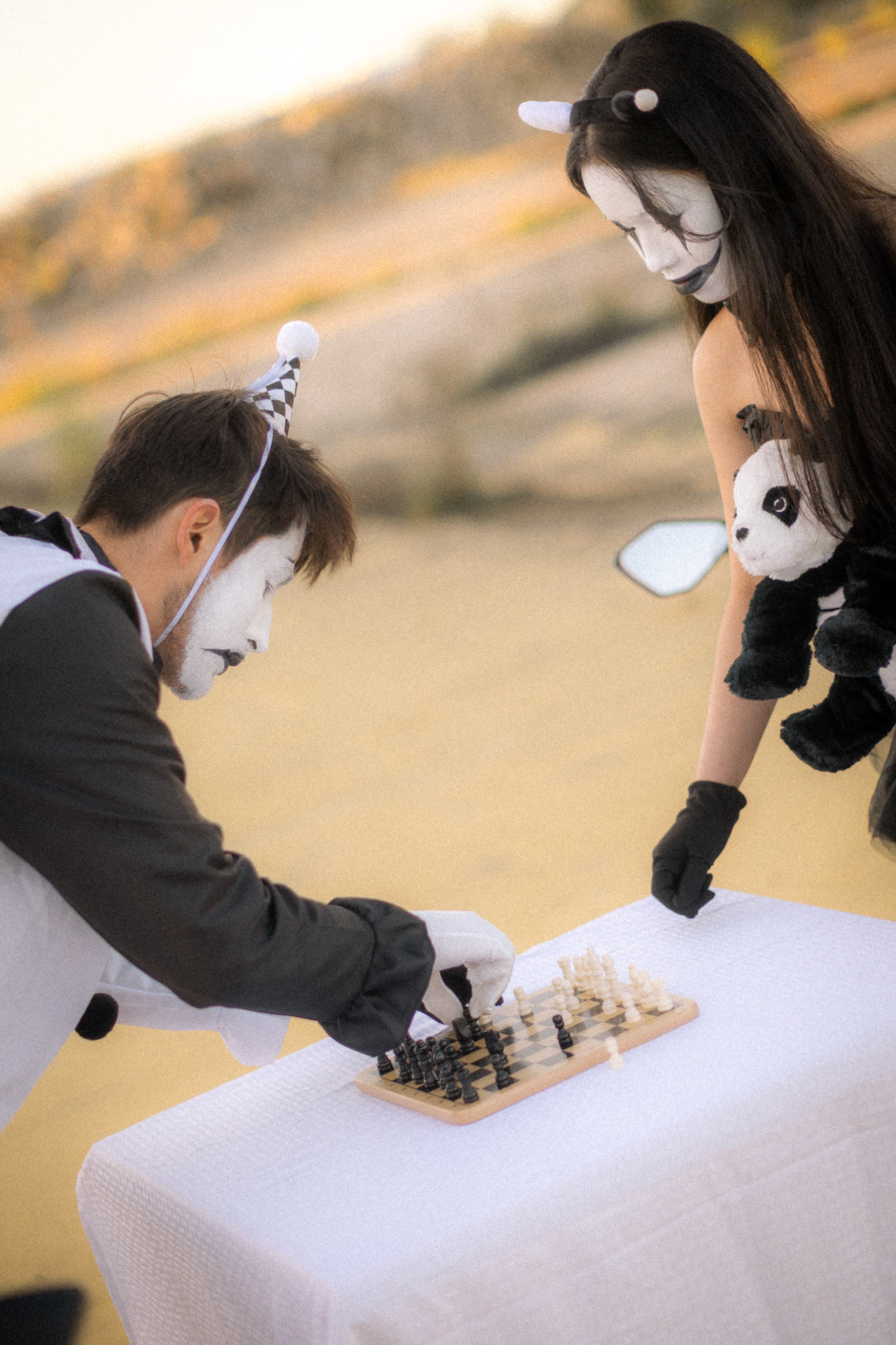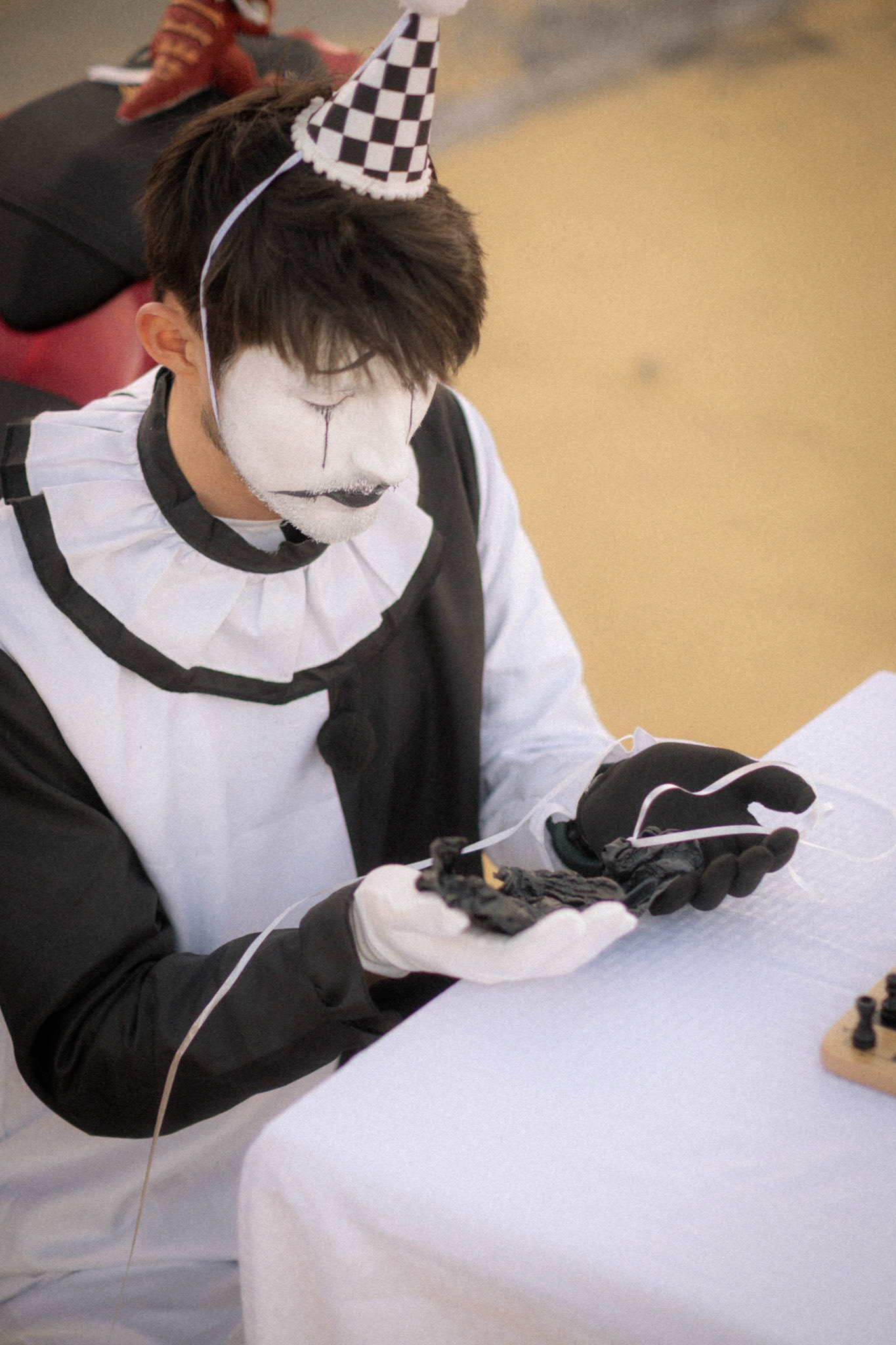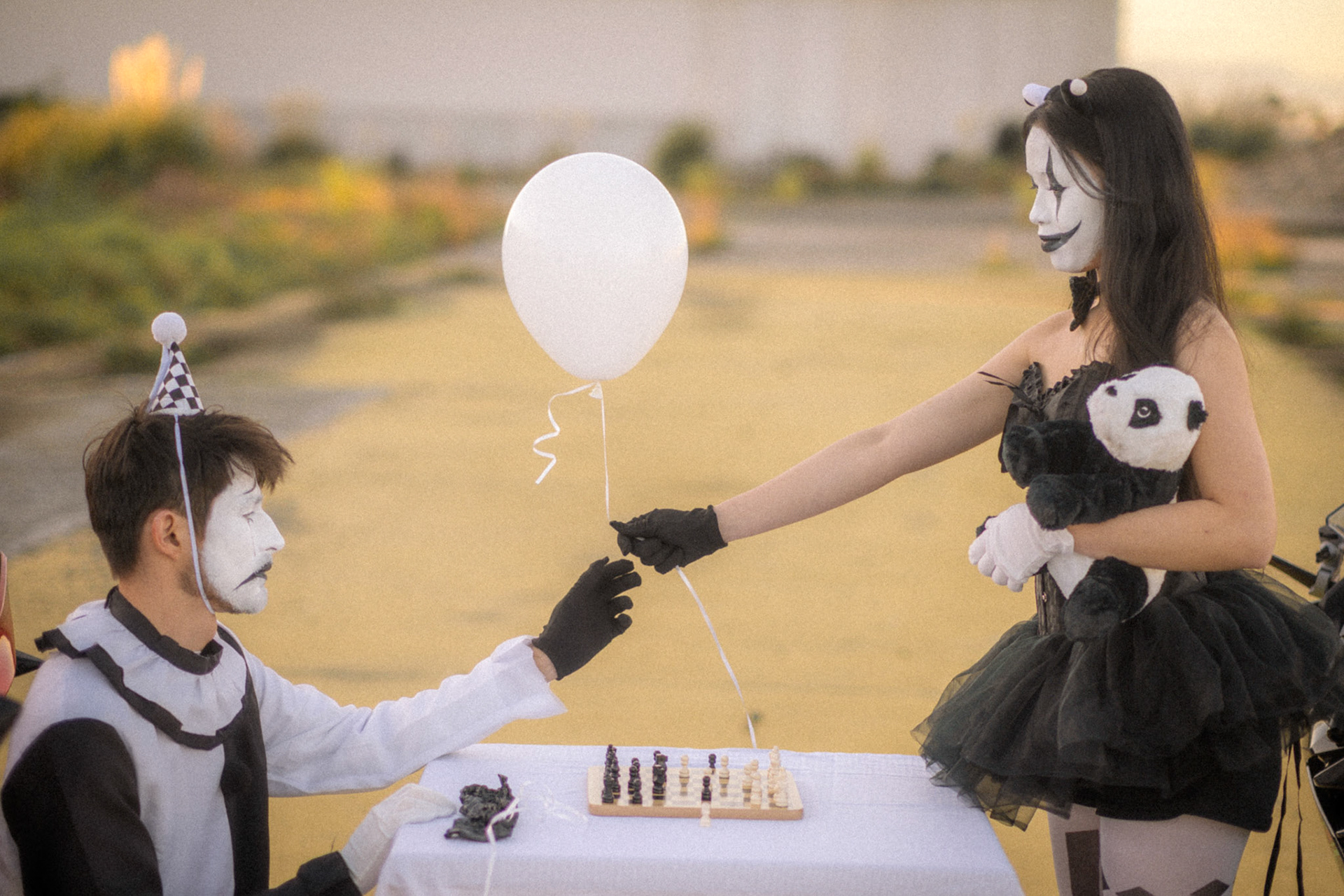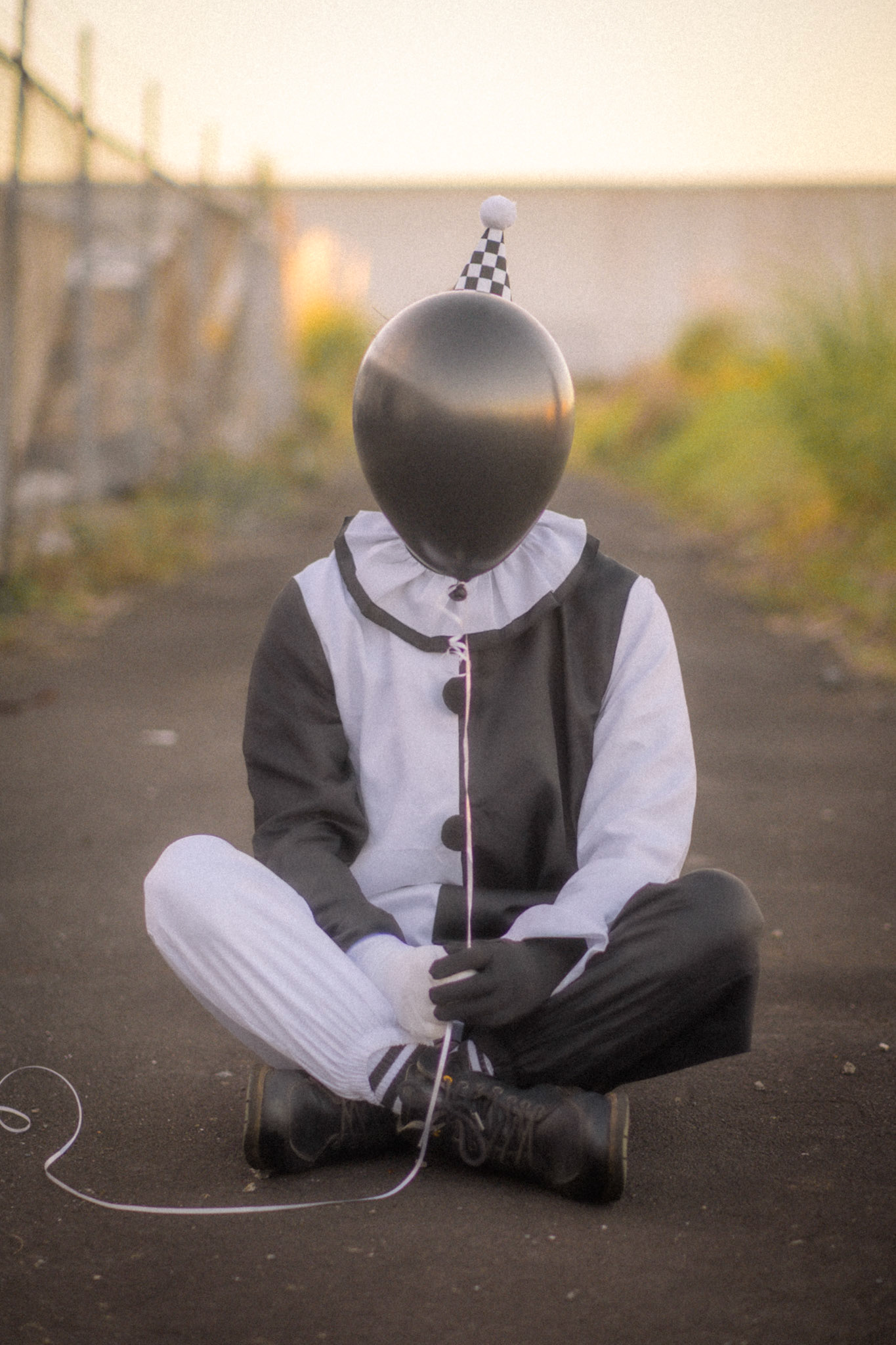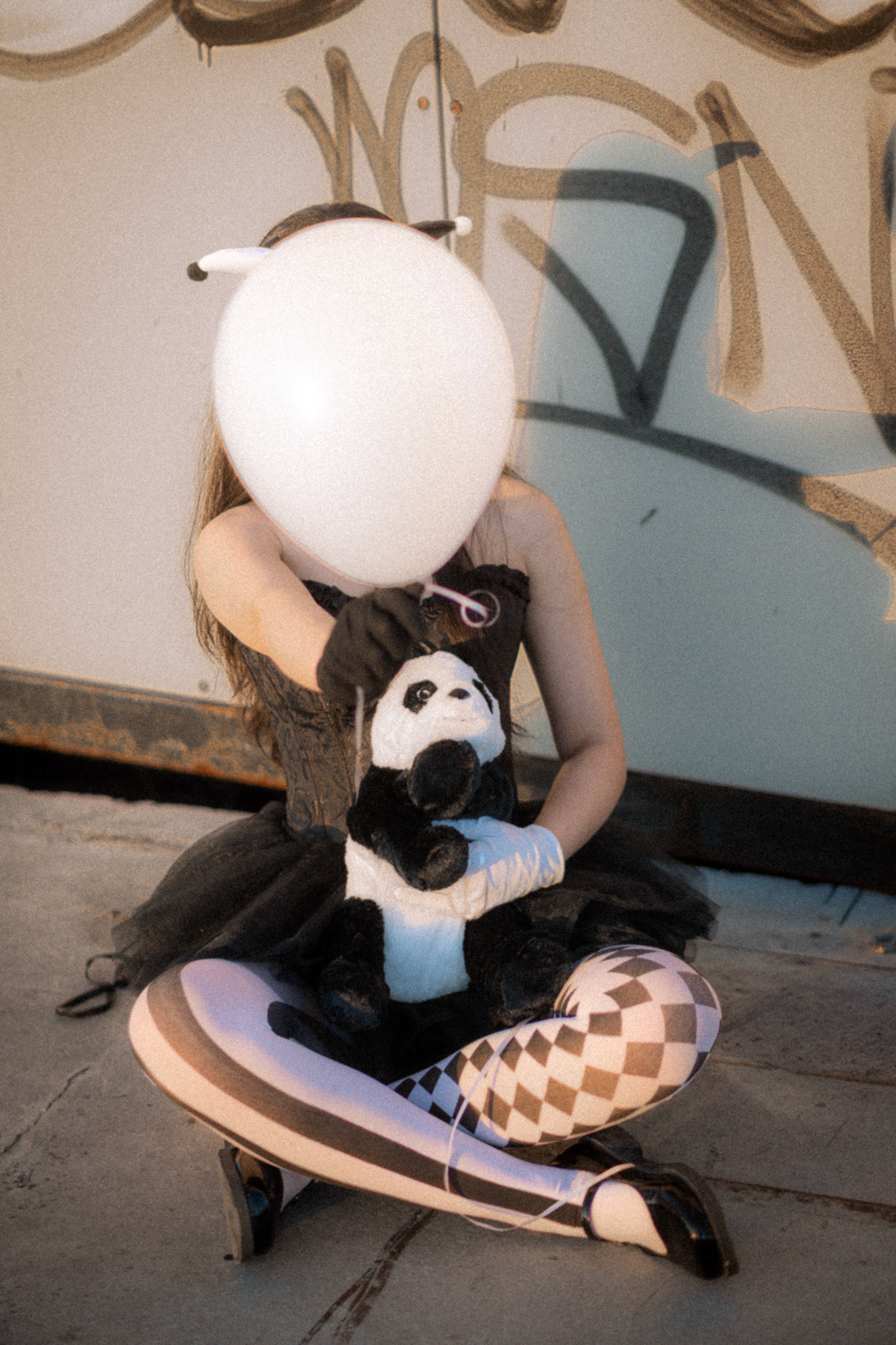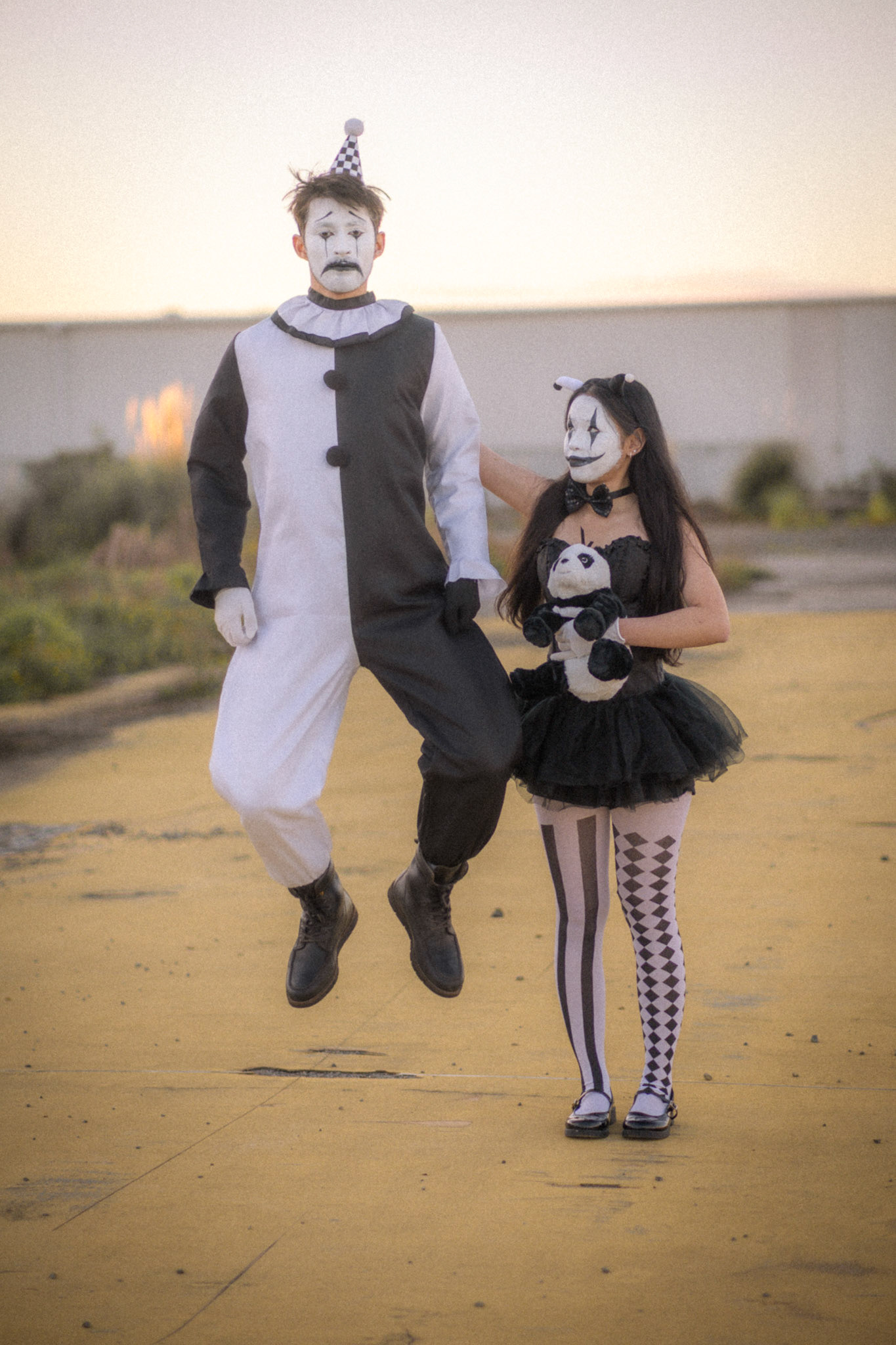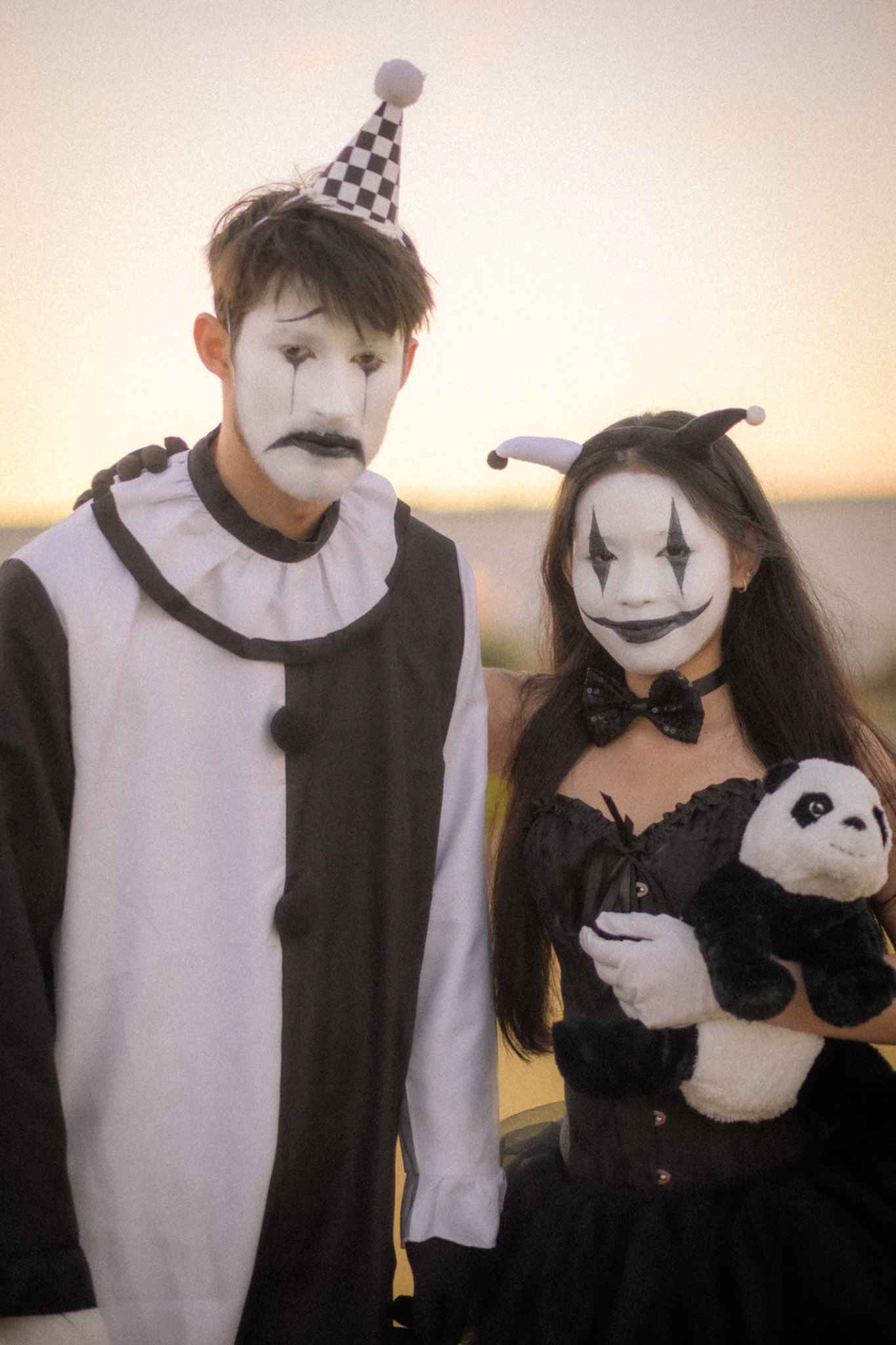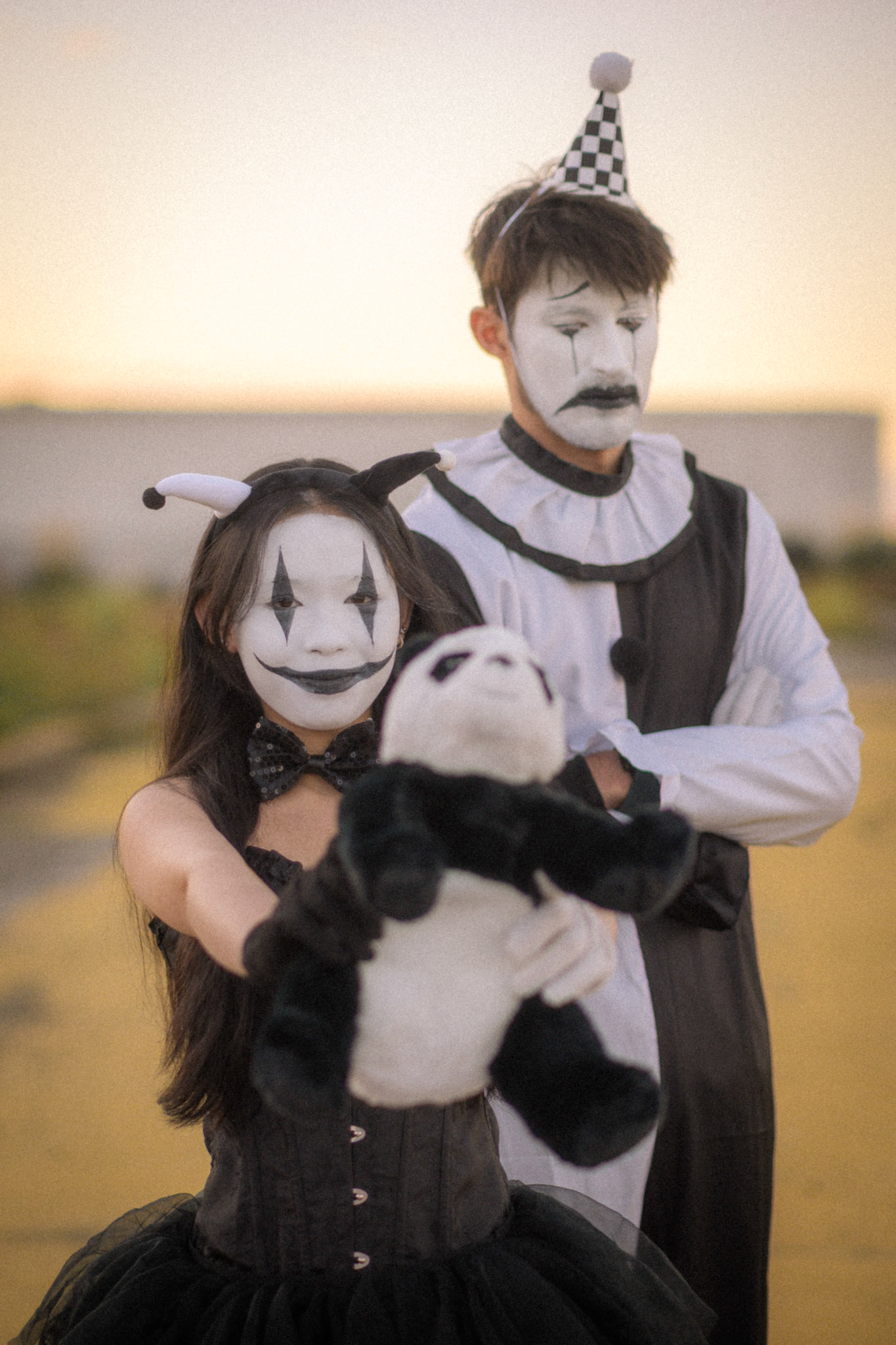
This shoot within “Dinner for Two” reimagines connection through a sibling relationship between two clown characters, Sadly and Smiley, focusing on emotional contrast, dependency, and shifting dynamics within shared space rather than romance.
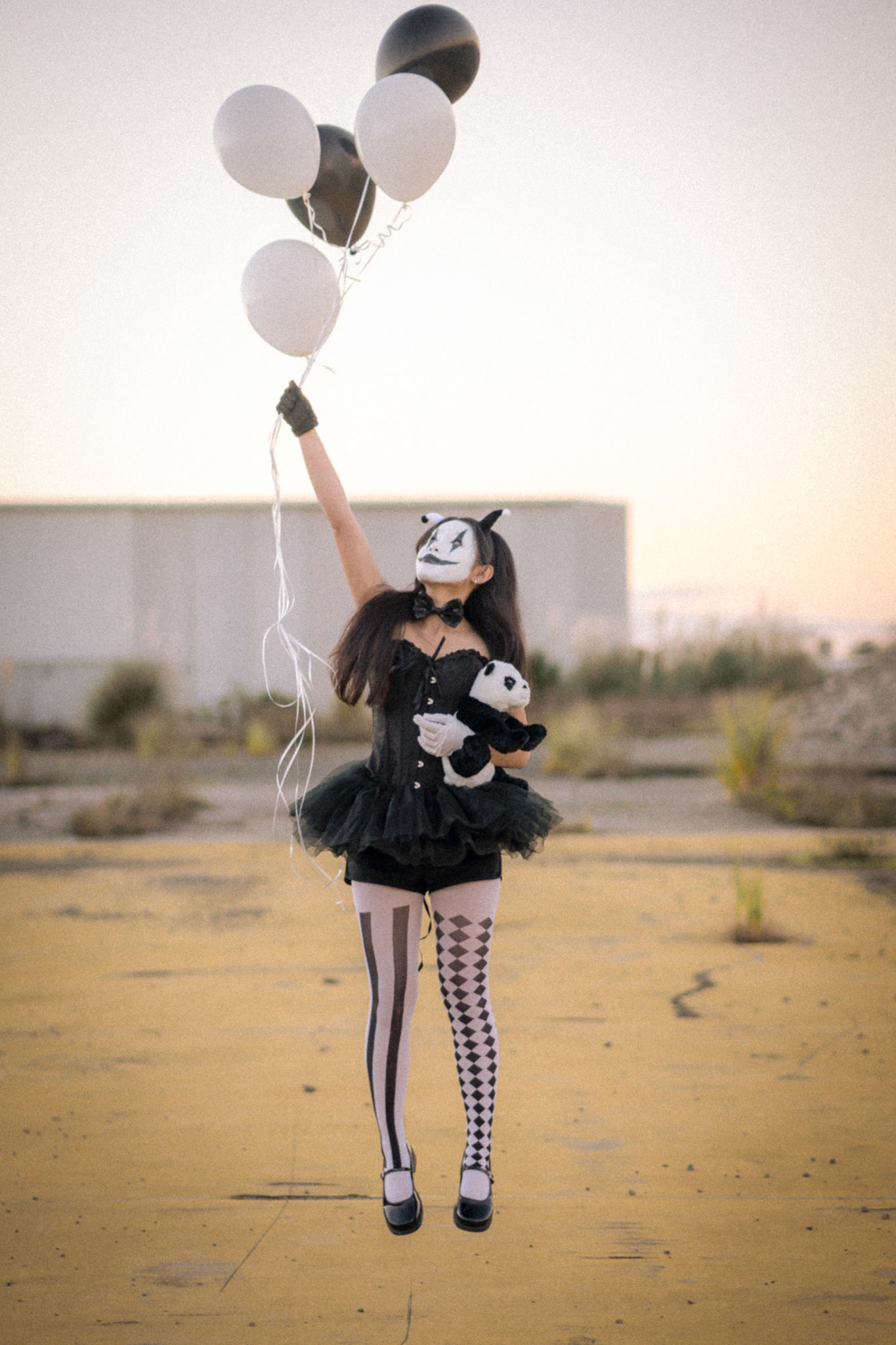
Clowns are used to amplify expression while concealing vulnerability through performance. Although typically associated with humor, here they are staged in controlled interactions that reveal care, tension, and imbalance. The black and white makeup reinforces their duality, positioning them as opposing yet inseparable figures.
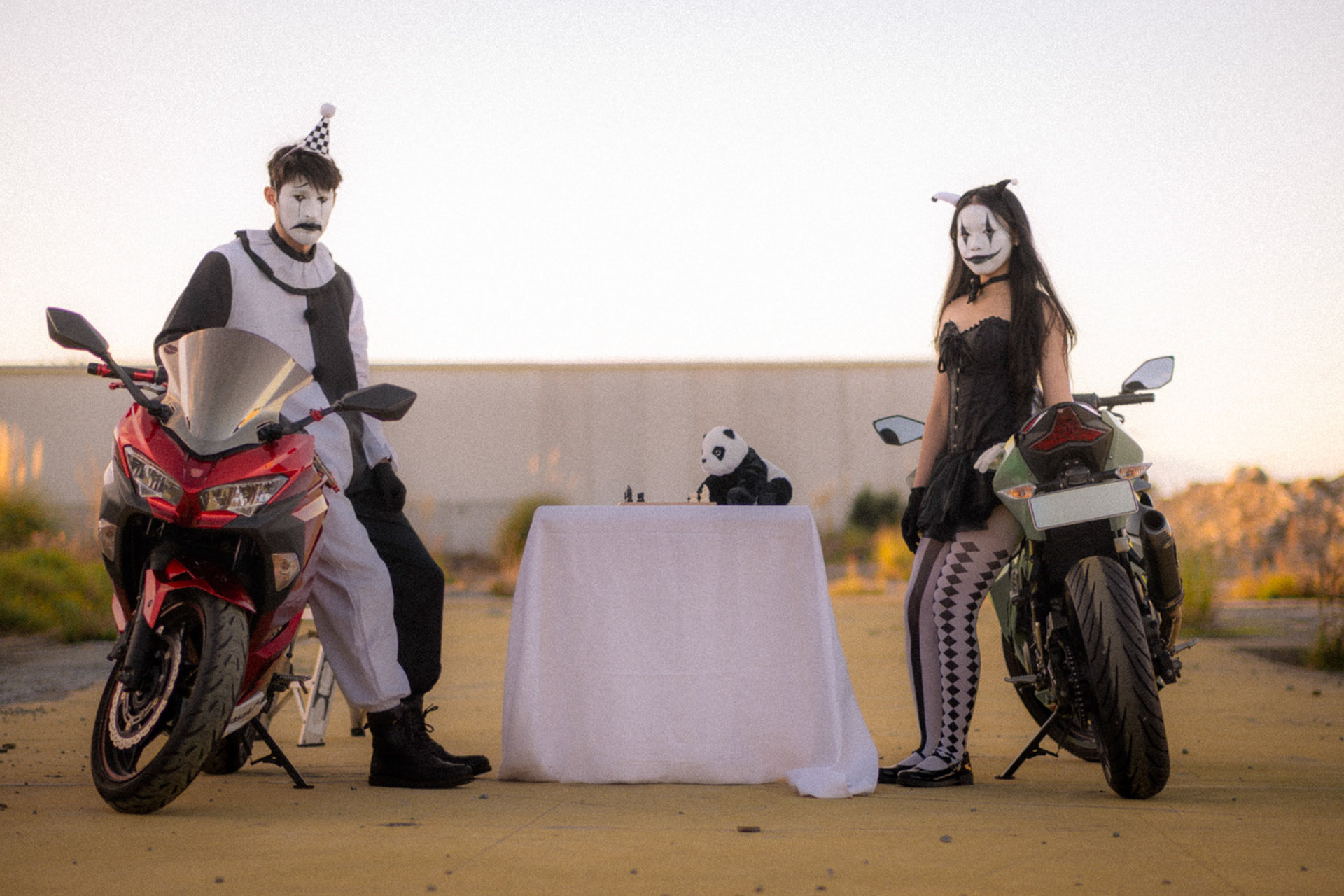
The opening image, with both characters leaning on motorcycles and a chess table placed between them, establishes “dinner” as a ritual of interaction rather than consumption. Chess replaces food as the central exchange, introducing themes of strategy, focus, and unspoken communication.
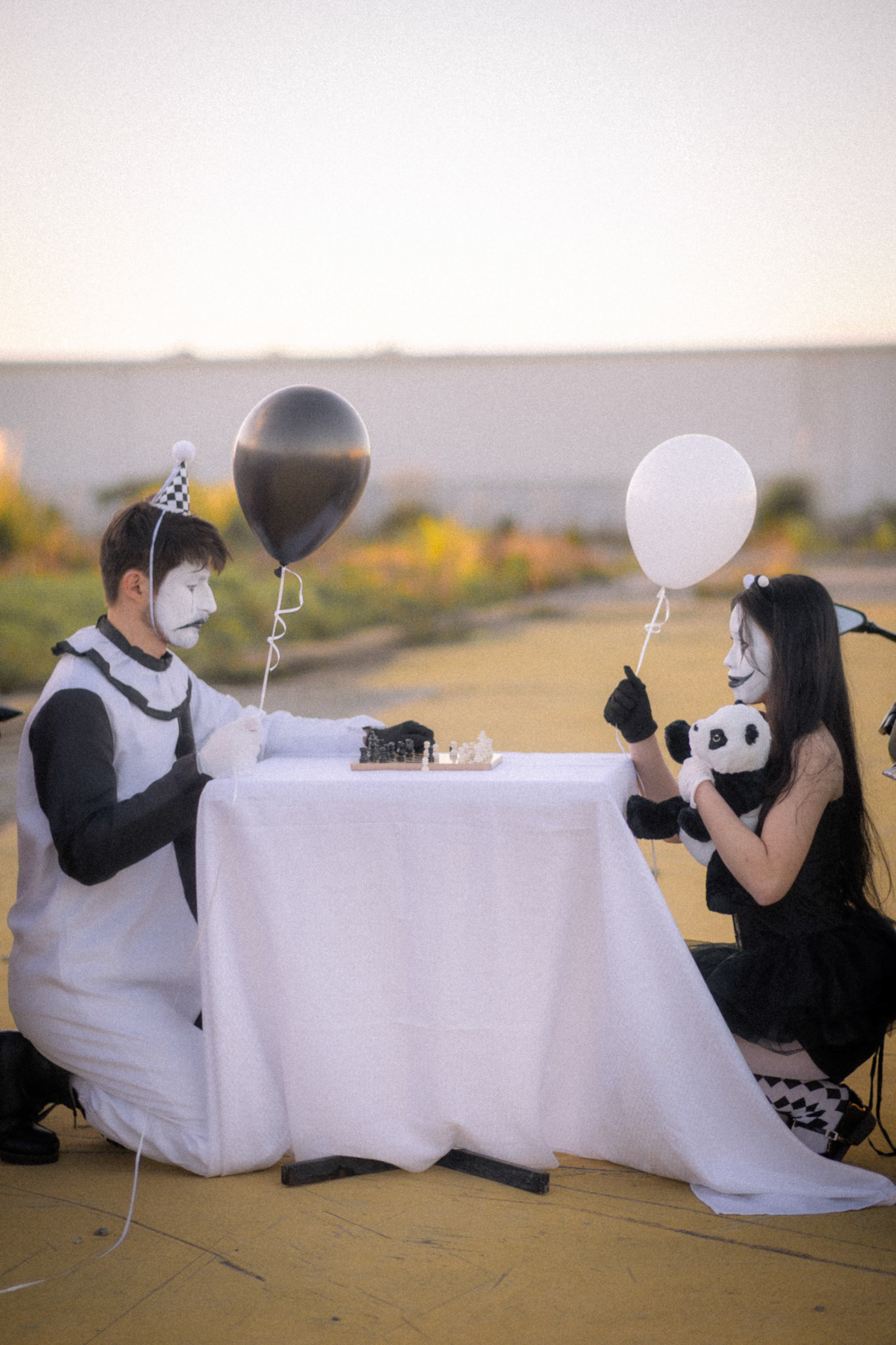
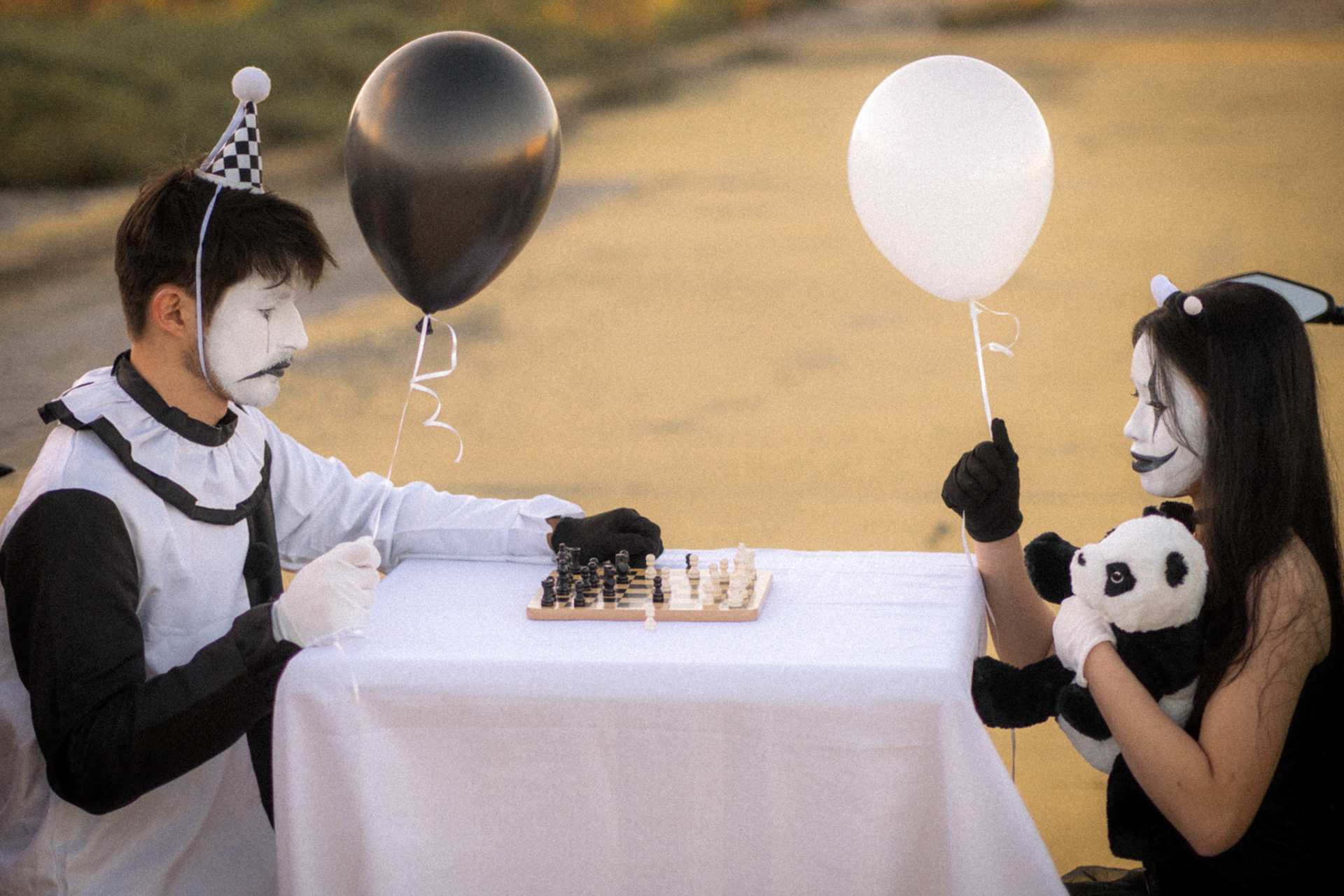
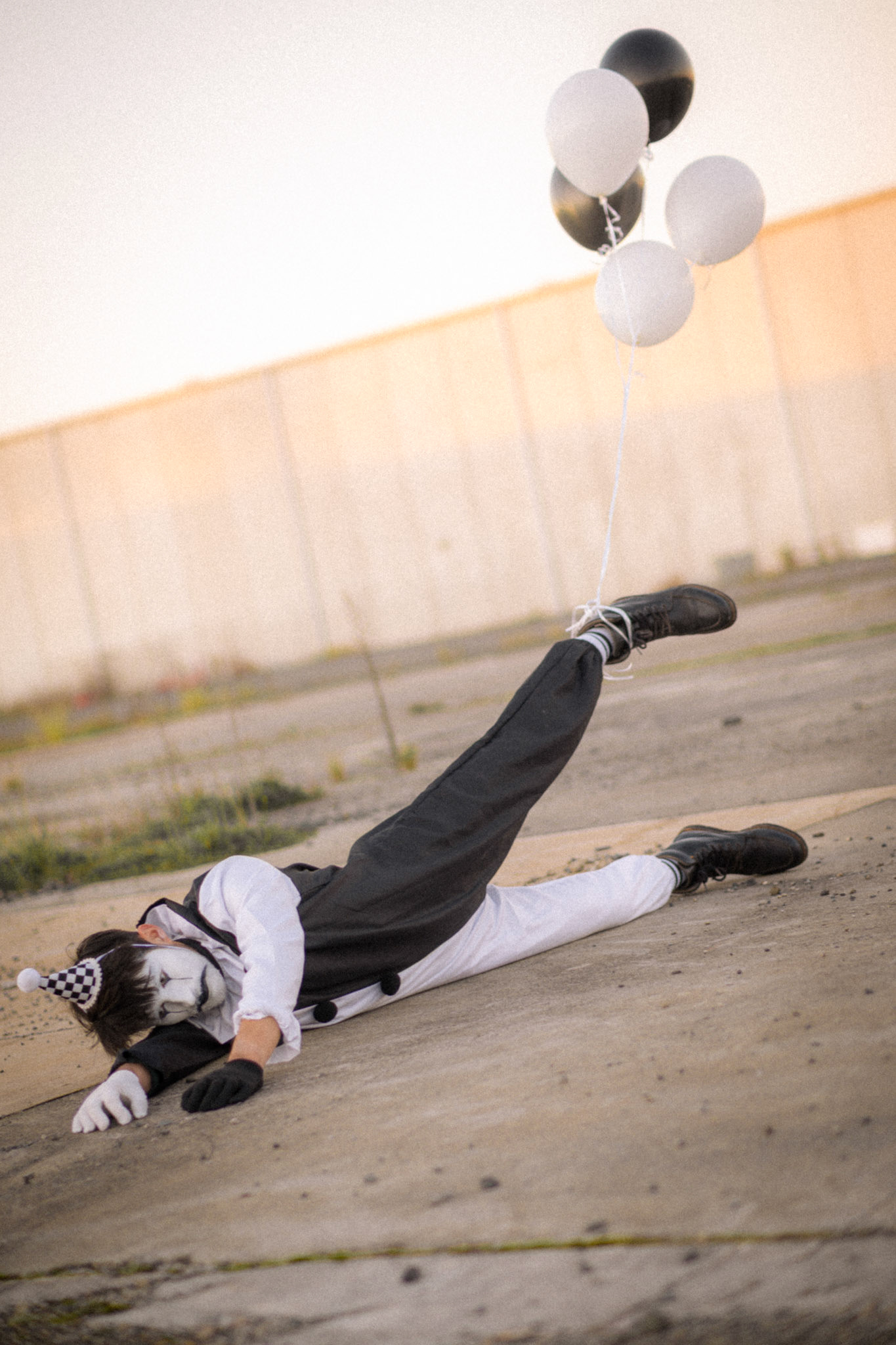
Across the sequence, recurring props such as balloons and a panda plush toy introduce contrasts between innocence and control. These objects become extensions of emotional state, reinforcing vulnerability, care, and imbalance through subtle exchanges and positioning.
The motorcycles and dynamic posing introduce movement and intensity, reinforcing emotional imbalance within a structured setting. Set against the rubble environment, the shoot contrasts chaos with controlled performance, where meaning is constructed through interaction rather than place.
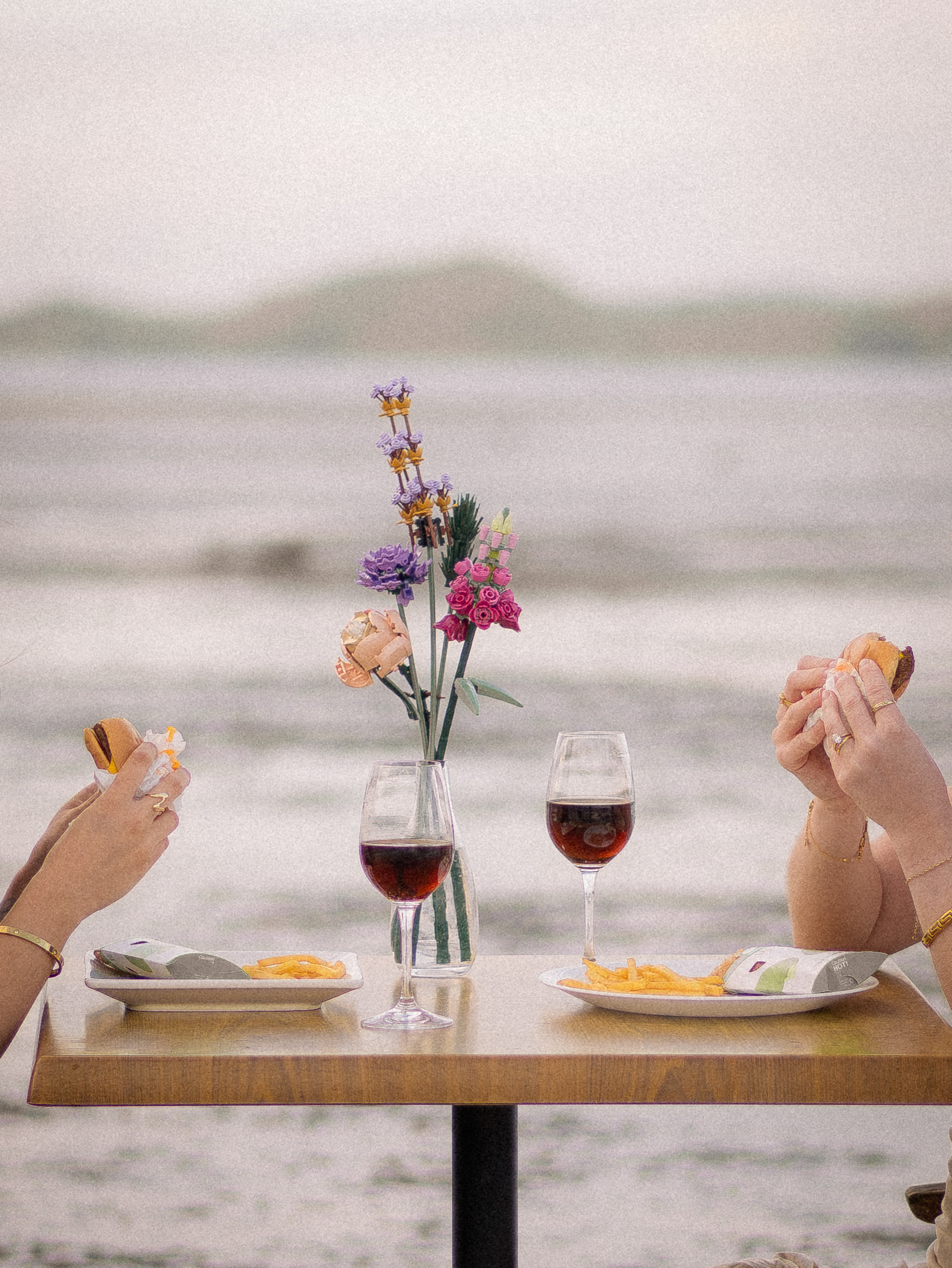
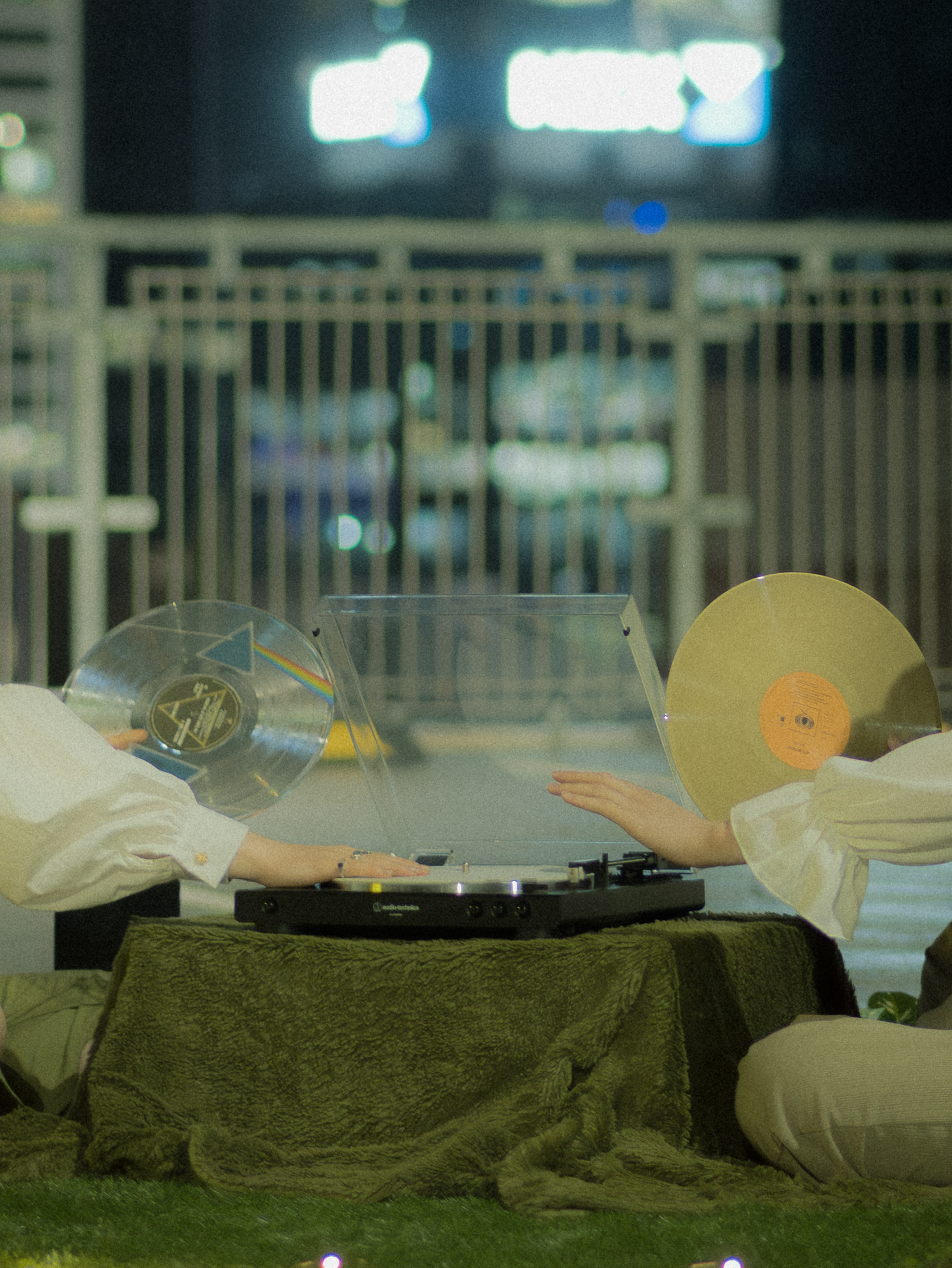
Compared to the beach and rooftop scenes, this shoot is the most performative and emotionally charged, using staged interaction and contrast to explore connection through tension rather than stillness or irony.
Overall, this shoot concludes Dinner for Two by exploring how connection can exist through contrast, performance, and imbalance, expressing intimacy through shared presence and emotional tension rather than traditional romance.